
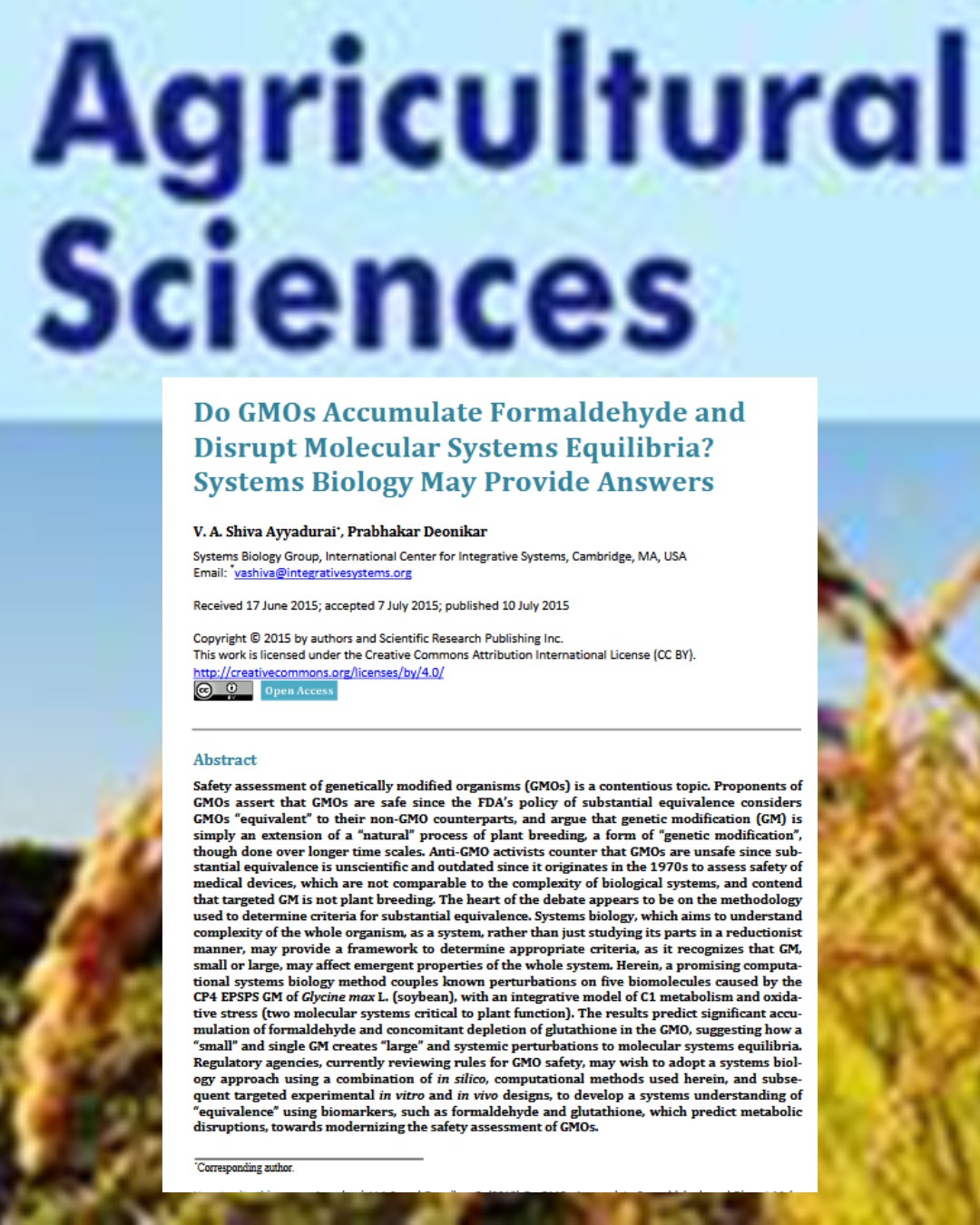
This study uses computational systems biology methods to model how a genetically modified soybean (specifically CP4 EPSPS glyphosate-resistant soybean) interacts with key molecular systems — namely C1 metabolism and oxidative stress — in the plant. Rather than focusing on isolated biochemical pathways, the authors integrate several known molecular interactions into a dynamic model to examine how the GMO may affect the plant’s internal chemical milieu. Their simulations predict that, under oxidative stress, the GMO version of soybean accumulates higher levels of formaldehyde — a known toxic compound — and experiences a more rapid depletion of glutathione, an important antioxidant molecule that helps detoxify formaldehyde and manage oxidative damage. These results contrast with the non-GMO version, where formaldehyde remains near zero and glutathione remains at stable levels, suggesting that the single genetic modification could induce broad changes in molecular homeostasis.
The authors interpret these in silico findings as evidence that small genetic changes may lead to “large and systemic perturbations” in molecular systems equilibria — changes beyond what conventional safety assessments like “substantial equivalence” typically measure. They propose that biomarkers such as formaldehyde and glutathione could serve as more relevant criteria for evaluating GMO safety, and argue for combining computational modeling with targeted experimental work (in vitro and in vivo) to establish a more systems-level understanding of GMO effects. The paper thus suggests a need to modernize GMO safety assessment by incorporating holistic systems biology approaches to detect emergent biochemical differences that reductionist methods might overlook.
