
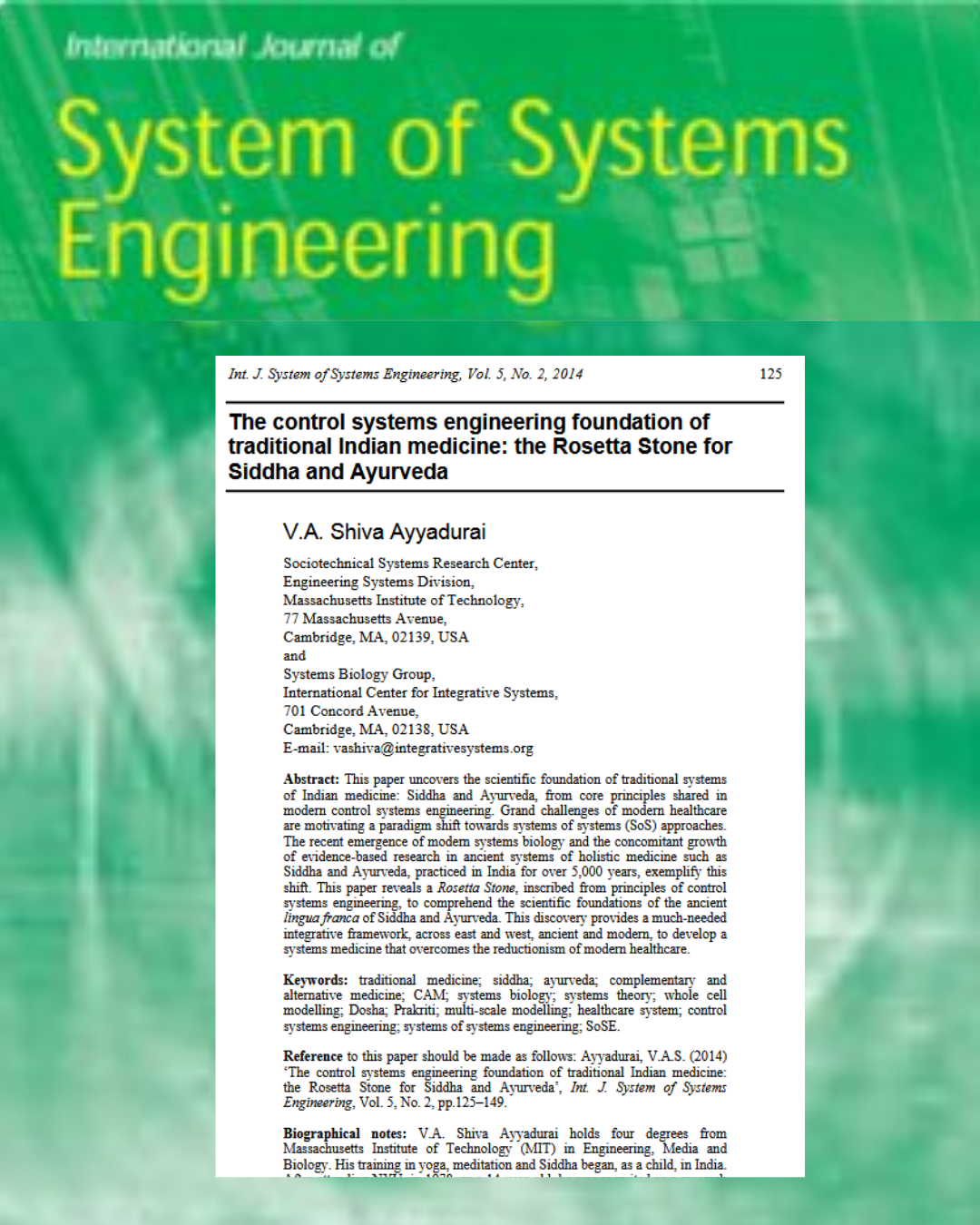
This paper proposes a systems-based framework for integrating the classical Indian medical traditions of Siddha and Ayurveda with modern systems biology, aiming to bridge ancient wisdom with contemporary scientific understanding. The author begins by outlining the foundational principles of both traditional systems, including concepts like the three doshas in Ayurveda and the three humors in Siddha, and draws parallels between these ancient classifications and modern biological processes such as homeostasis, metabolism, and regulatory networks. By interpreting doshic imbalances in terms of perturbations in interconnected molecular systems — including metabolic, hormonal, and immune networks — the paper reframes traditional diagnostic categories as holistic descriptions of system-level dysfunctions rather than isolated symptoms.
Building on this conceptual mapping, the author argues that modern reductionist biomedical approaches are limited in their ability to account for the dynamic, multi-scale interactions that characterize living systems, and that integrative systems science provides a formal methodology for unifying traditional qualitative insights with quantitative models. The paper suggests that viewing health and disease through this combined lens could enhance both clinical practice and research, offering a pathway to personalized medicine that respects individual variability in physiology and response to treatment. In doing so, it positions the Siddha and Ayurvedic frameworks as early forms of systems thinking, presciently emphasizing balance, feedback, and network interdependence long before these concepts were formalized in modern biology.
