

Deportation Theater (2026)
This study explains how the U.S. immigration “enforcement” is engineered as a spectacle, not a solution. For over 30 years, only 1–3% of undocumented immigrants are deported annually—just enough to generate fear, never enough to disrupt billionaire profits from cheap labor. Using systems science, this paper reveals how both parties weaponize immigration to divide workers, suppress wages, and expand a permanent police and surveillance state. The real crisis isn’t immigration—it’s a divide-and-rule system designed to keep working people fighting each other instead of the billionaire elite.
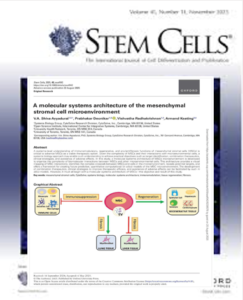
A molecular systems architecture of the mesenchymal stromal cell microenvironment (2025)
This study presents a molecular systems architecture of the mesenchymal stromal cell (MSC) microenvironment, revealing how MSCs regulate immunosuppression, regeneration, fibrosis, and anti-fibrotic processes across tissues. By organizing complex signaling interactions into a multi-layered systems model, the work provides a quantitative framework for regenerative and immune-modulatory therapeutics.
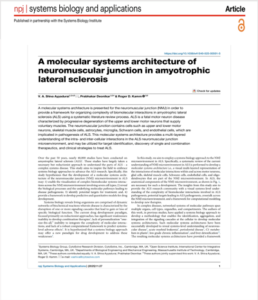
A molecular systems architecture of neuromuscular junction in amyotrophic lateral sclerosis (2025)
This paper introduces a comprehensive molecular systems architecture of the neuromuscular junction (NMJ) microenvironment in amyotrophic lateral sclerosis (ALS). By integrating multi-cellular signaling pathways across neurons, glia, muscle, and immune cells, the framework enables systems-level target discovery and combination therapeutic strategies for ALS.
Molecular Systems Architecture of Interactome in the Acute Myeloid Leukemia Microenvironment (2025)
This systematic review presents a molecular systems architecture of the acute myeloid leukemia (AML) microenvironment, revealing how leukemic cells interact with stromal, immune, and vascular cells to promote survival and immune evasion. The framework enables identification of therapeutic targets that disrupt malignant cell communication rather than isolated oncogenic pathways.
In-Silico Analysis & In-Vivo Results Concur on Glutathione Depletion in Glyphosate Resistant GMO Soy, Advancing a Systems Biology Framework for Safety Assessment of GMOs (2016)
A recent study published in the peer-reviewed journal American Journal of Plant Sciences predicted a nearly 400% difference in glutathione oxidation as measured by the ratio of GSH and GSSG, in RRS that are glyphosate-treated glyphosate-resistant Soy versus the Organic Soy. These predictions also concur with in vivo greenhouse results. This concurrence suggests these in silico models of C1 metabolism may provide a viable and validated platform for biosafety assessment of GMOs, and aid in selecting rational criteria for informing in vitro and in vivo efforts to more accurately decide in the problem formulation phase which parameters need to be assessed so that conclusion on “substantial equivalence” or material difference of a GMO and its non-GMO counterpart can be drawn on a well-grounded basis.
Do GMOs Accumulate Formaldehyde and Disrupt Molecular Systems Equilibria? (2015)
This research provides, to the authors’ knowledge, the first integrative model of oxidative stress and C1 metabolism in plants. Increased oxidative stress can cause irreversible damage to photosynthetic components and is harmful to plants. Perturbations at the genetic level may increase oxidative stress and upregulate antioxidant systems in plants.
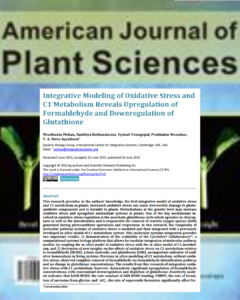
Integrative Modeling of Oxidative Stress and C1 Metabolism Reveals Upregulation of Formaldehyde and Downregulation of Glutathione (2015)
This research provides, to the authors’ knowledge, the first integrative model of oxidative stress and C1 metabolism in plants. Increased oxidative stress can cause irreversible damage to photosynthetic components and is harmful to plants. Perturbations at the genetic level may increase oxidative stress and upregulate antioxidant systems in plants.
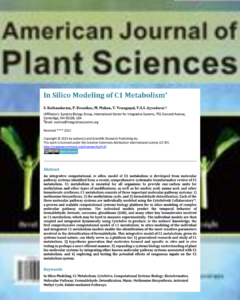
In Silico Modeling of C1 Metabolism (2015)
This paper provides an integrative computational, in silico, model of C1 metabolism is developed from molecular pathway systems identified from a recent, comprehensive systematic bioinformatics review of C1 metabolism.
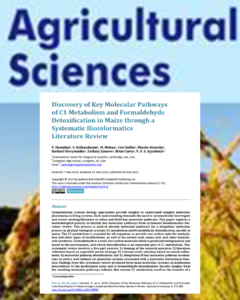
Discovery of Key Molecular Pathways of C1 Metabolism and Formaldehyde Detoxification in Maize (2015)
This paper explores a methodological process to identify key molecular pathways from systematic bioinformatics literature review. This process is used to identify molecular pathways for a ubiquitous molecular process in all plant biological systems: C1 metabolism and formaldehyde detoxification, specific to maize.
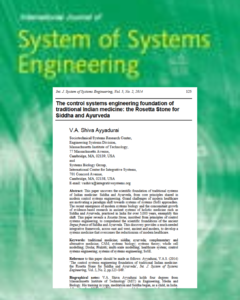
The Rosetta Stone for Siddha and Ayurveda (2014)
A breakthrough paper that conclusively validates the scientific foundation of Ayurveda and Siddha, based on modern control systems engineering, has been published in the International Journal of Systems of Systems Engineering (IJSSE), an eminent peer-reviewed international systems engineering journal. The paper’s research findings were presented at Sages & Scientists Conference in Carlsbad, California USA.
CytoSolve™: A Scalable Computational Method for Dynamic Integration of Multiple Molecular Pathway Models (2011)
CytoSolve introduces a novel systems biology framework that dynamically integrates multiple independent molecular pathway models in parallel without merging source code—making it scalable, distributable, and maintainable. This approach enables large-scale, mechanistic simulations of complex biological systems using modular components rather than monolithic, single-machine models.
